Long Bio
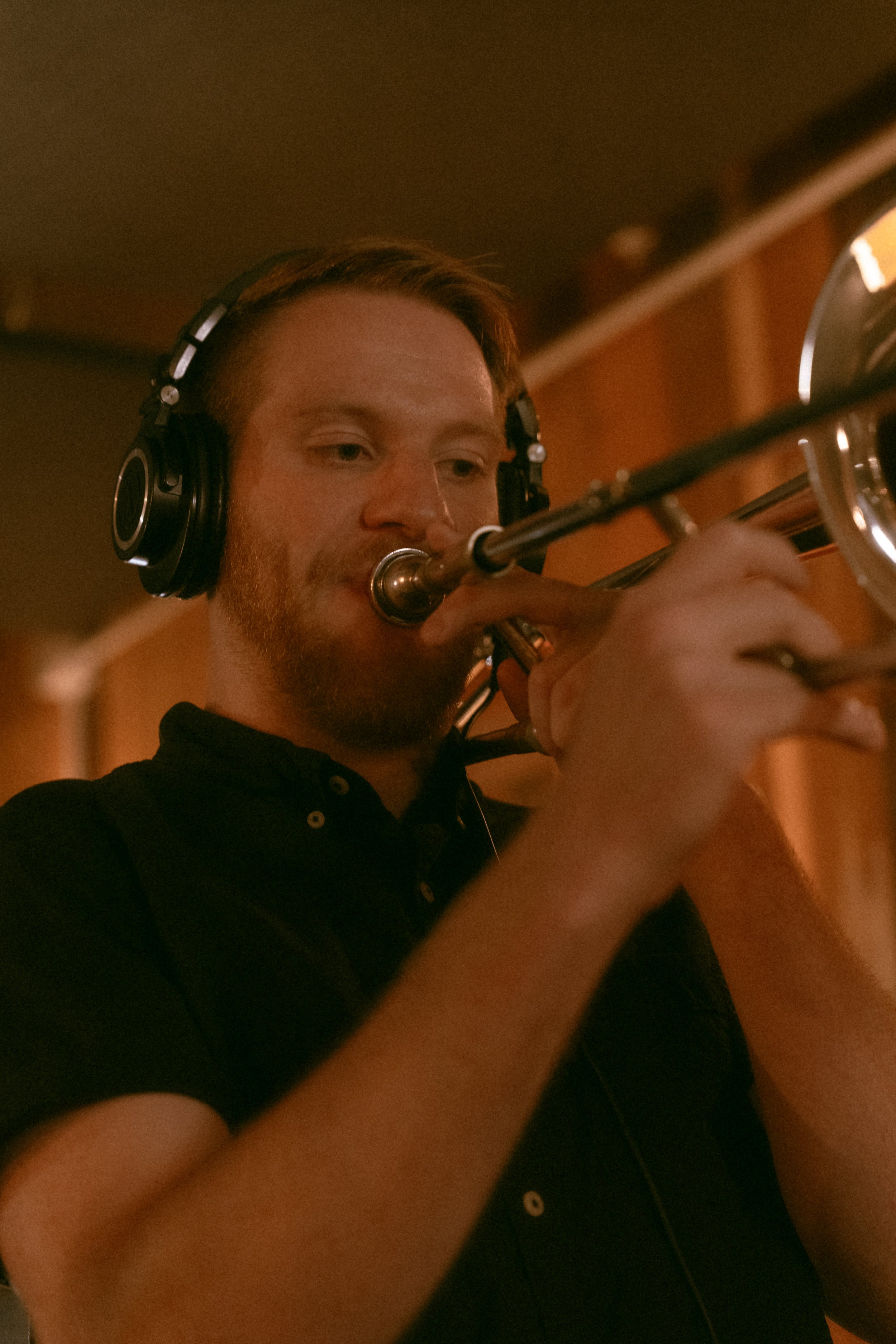
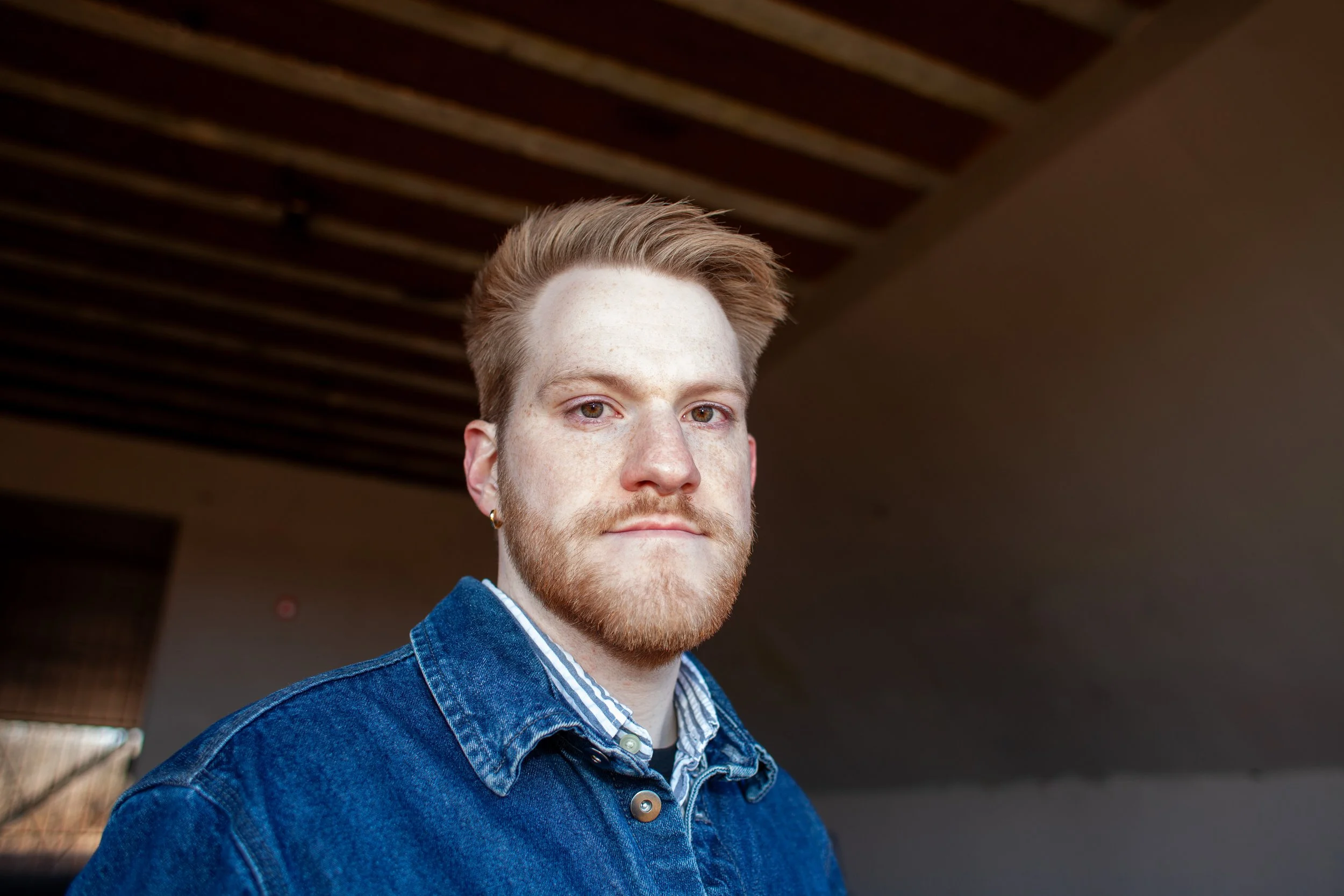
Andrew Danforth is a Brooklyn-based trombonist, composer, and bandleader whose music brings together the worlds he has traversed: Indianapolis jazz tradition, orchestral training, underground rock, improvised music, and years spent in DIY spaces across the Midwest and New York.
His projects fold improvising horns into distorted guitars, ambient textures, and dense arrangements shaped as much by jazz and contemporary classical music as indie rock and emo. Danforth came up through jazz clubs, orchestras, house shows, and self-booked tours — experiences that continue to shape how he writes, improvises, and builds ensembles.
Still in his twenties, Danforth has already built a broad career across jazz and classical music. A graduate of Indiana University and the University of Illinois Urbana-Champaign, he has performed with groups including the Indianapolis Symphony Orchestra, Princeton Symphony Orchestra, Heartbeat Opera, and National Repertory Orchestra. His independently released 2023 debut album, Homegrown, established him as a young composer deeply engaged with Indianapolis history and identity. Its follow-up, See The Space As New, moves into a louder, guitar-driven sound that reflects the musical life he built between the Midwest and New York.
Born and raised in Indianapolis, Danforth grew up in a deeply musical household. His father has served as principal horn of the Indianapolis Symphony Orchestra since 1988, and all four siblings studied piano as children. Danforth began piano lessons at age four before switching to euphonium in middle school band. Jazz entered his life through family records, school jazz band, and hours spent with the Smithsonian Collection of Jazz and albums by artists including Chick Corea. Corea’s The Mad Hatter became especially important to him. “I had never heard any music like that up until that point,” Danforth says. “That totally got me.”
By high school, music had overtaken nearly everything else in his life. Danforth quit competitive tennis to focus entirely on music, played in youth orchestras, busked around Indianapolis with friends, and immersed himself in jazz. Around the same time, his high school jazz director told him he could no longer play euphonium in jazz band, forcing a switch to trombone. Jim Beckel, principal trombonist of the Indianapolis Symphony Orchestra, and Rich Dole played significant roles in his development on the instrument.
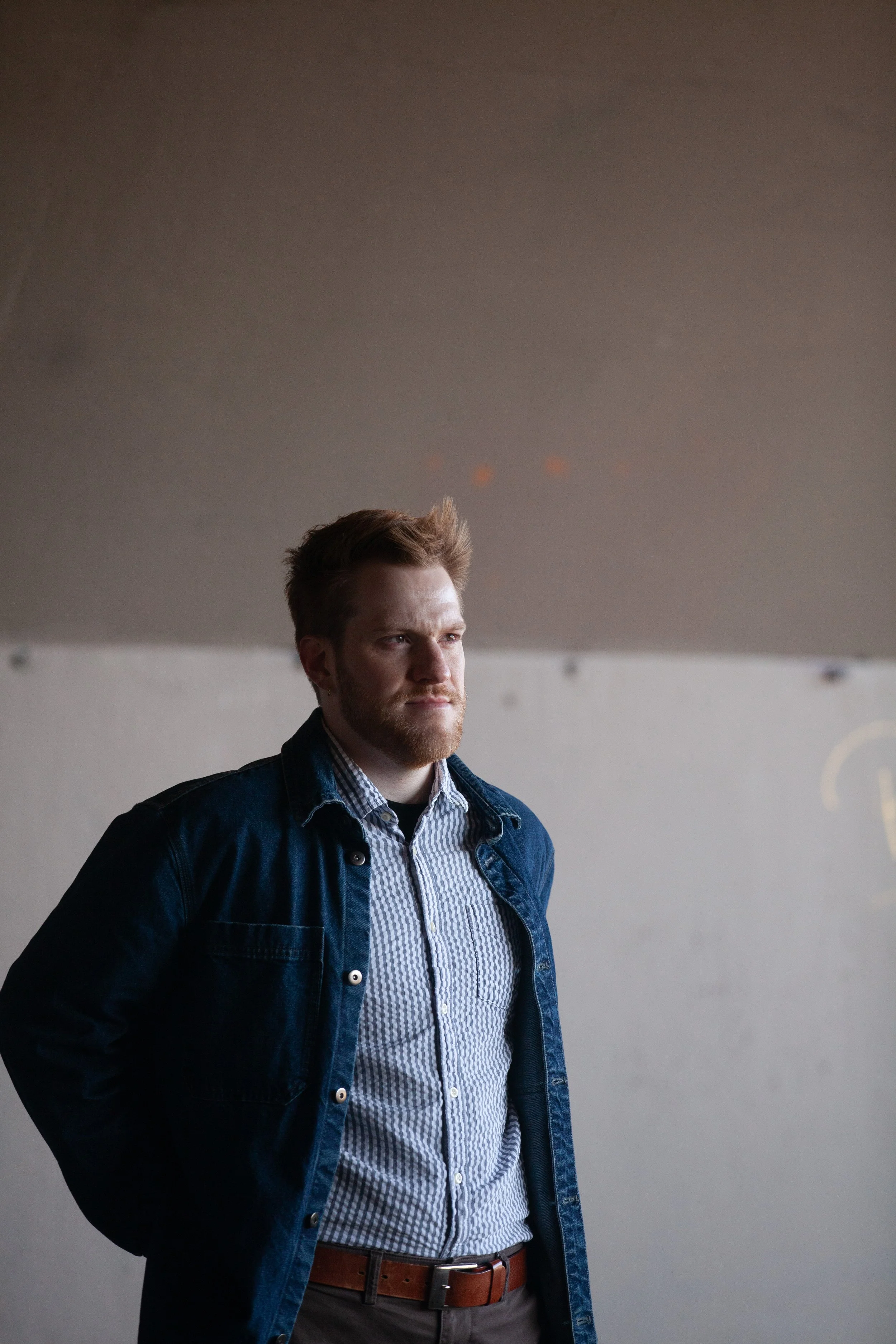
After graduating high school in 2017, Danforth enrolled at Indiana University to study with Carl Lenthe and Wayne Wallace. He completed a trombone performance degree in three years after testing out of much of the school’s academic curriculum. “I never wanted to do both jazz and classical at once,” he says. “I felt that I really needed to build my energy towards either discipline at one time.”
In early 2020, he traveled overnight to New York with an Indiana University big band for the Jack Rudin Jazz Championship before returning days later to perform the Serocki Concerto for Trombone and Orchestra after winning the school’s concerto competition. “It was a crazy week,” Danforth recalls. “Playing small-bore Duke Ellington-style music in New York City, taking a bus out there overnight, and then coming back, not having played on my large orchestral trombone, and playing that concerto with the orchestra.”
A month later, the pandemic shut the music world down. That summer, Danforth worked long factory shifts building ventilators in Kokomo, Indiana, while preparing to pivot fully toward jazz study. “There was a period of time I worked 21 days in a row without a day off,” he says. “It was like a fever dream.” Away from school and isolated from normal musical life, he spent long hours practicing, experimenting with extended techniques, and, as he puts it, “doing some crazy stuff on the trombone.”
In fall 2020, Danforth entered the jazz studies master’s program at the University of Illinois Urbana-Champaign, studying with trombonist Jim Pugh. Living in Champaign-Urbana exposed him to the region’s thriving DIY scene, which became a major influence on his writing. Danforth often attended house shows where, as he recalls, “you could go on a Friday night and find five different house shows with five different bands.” He discovered bands including American Football, Hum, Braid, Castor, and C-Clamp while beginning to imagine how distortion, texture, and improvisation could function together in his own music.
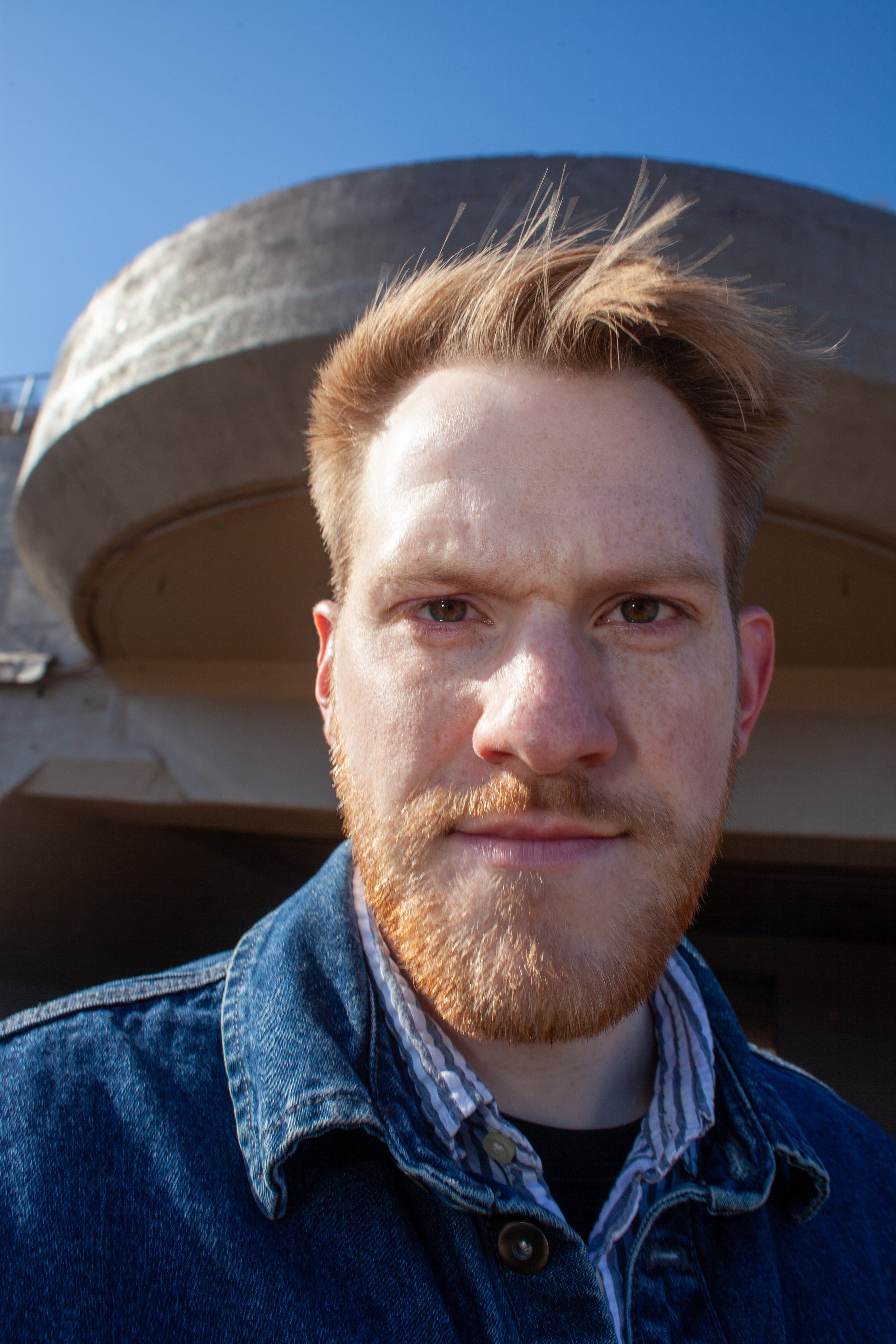
At Illinois, Danforth deepened his commitment to original composition. Through a surreptitious meeting, he formed a rehearsal-heavy combo with saxophonist Kevin King that focused entirely on original material. After completing his master’s degree in 2022, he returned to Indianapolis with a specific plan: save money, record an album, and move to New York.
The result was Homegrown, Danforth’s independently released 2023 debut album, recorded in Bloomington before a self-booked Midwest tour through Chicago, Indianapolis, Bloomington, Urbana, St. Louis, and Cleveland. The album reflected on Indianapolis history, regional identity, and the legacy of Indiana Avenue, the historically Black cultural district that produced artists including Freddie Hubbard, Wes Montgomery, J.J. Johnson, Slide Hampton, David Baker, and James Spaulding.
The title carried personal meaning as well. Years earlier, a New York trombonist had described Danforth’s improvising as “homegrown,” a comment he initially took as criticism before eventually embracing it as a core part of his musical identity. Danforth later described that quality as something that “would never leave the core” of his music.
Danforth relocated to New York in June 2023 and quickly encountered the financial realities of early-career bandleading. He worked substitute teaching jobs, cared for a man with dementia, played late-night sessions, and booked his own groups across the city. “I was doing the whole beginner bandleader circuit,” he says. A difficult 2024 gig — where only a handful of people showed up and Danforth still paid the band out of pocket — nearly stopped the project entirely.
Within months, Danforth regrouped and rebuilt the band. After Homegrown, he began experimenting with a two-guitar ensemble inspired partly by the records he had fallen in love with in Illinois. The group initially played arrangements of songs by American Football, Hum, and Castor while Danforth figured out how distorted guitars and improvising horns could coexist within the same ensemble. Eventually, the covers disappeared and the band became a vehicle for original material.
See The Space As New took shape through rehearsals, live performances, and studio experimentation with producers Chris Botta, David Gibson, and George Schatzlein of the New York rock band Plastic. Guitarists Logan Butler and Spencer Hoefert approached the material from different backgrounds — Butler with experience in shoegaze bands, Hoefert from a more traditional jazz setting — while drummer Jay Sawyer became a major force behind the record’s energy and momentum.
One experience — entering a friend’s empty room and knowing they would not be coming back — helped crystallize the album’s title and emotional framework. “I had written this piece, ‘See The Space As New,’ about the idea of a shadow being a sense of comfort because someone’s there,” Danforth says. “When someone’s gone, there’s this overwhelming brightness from the sun shining into this room.”
For Danforth, the album became a way of bringing together years of experience, influence, and personal history. “There are so many elements in this record that I can trace back to different parts of my upbringing and growth as a musician,” he says. “It’s a true statement of my musical heritage and continued sound exploration.”
Short Bio
Andrew Danforth is a Brooklyn-based trombonist, composer, and bandleader whose music brings together the worlds he has moved through: Indianapolis jazz tradition, orchestral training, underground rock, improvised music, and years spent in DIY spaces across the Midwest and New York.
His projects fold improvising horns into distorted guitars, ambient textures, and dense arrangements shaped as much by jazz and contemporary classical music as indie rock and emo. Danforth came up traversing jazz clubs, orchestras, house shows, and self-booked tours — experiences that continue to shape how he writes, improvises, and builds ensembles.
A graduate of Indiana University and the University of Illinois Urbana-Champaign, Danforth has performed with groups including the Indianapolis Symphony Orchestra, Princeton Symphony Orchestra, Heartbeat Opera, and National Repertory Orchestra while maintaining an active presence in New York large ensembles and independent projects. Raised in Indianapolis, he grew up in a musical household — his father has served as principal horn of the Indianapolis Symphony Orchestra since 1988 — and immersed himself early in jazz, youth orchestras, and busking around the city with friends.
After initially focusing on classical trombone at Indiana University, Danforth gradually moved deeper into jazz, improvisation, and original composition. At the University of Illinois Urbana-Champaign, he immersed himself in the region’s DIY music scene and absorbed the influence of bands including American Football, Hum, Braid, Castor, and C-Clamp, all of which helped shape the musical language that would later emerge in his own work.
After completing his master’s degree in 2022, Danforth returned to Indianapolis with a plan to record an album and move to New York. The result was Homegrown, recorded in Bloomington before a self-booked Midwest tour through Chicago, Indianapolis, Bloomington, Urbana, St. Louis, and Cleveland. The album reflected on Indianapolis history and the legacy of Indiana Avenue, the historically Black cultural district that produced artists including Freddie Hubbard, Wes Montgomery, J.J. Johnson, Slide Hampton, David Baker, and James Spaulding.
Danforth relocated to New York in 2023 and began developing the material that became See The Space As New while balancing freelance work, late-night sessions, and the realities of early-career bandleading. Built around a two-guitar ensemble and shaped through rehearsals, live performances, and studio experimentation with producers Chris Botta, David Gibson and George Schatzlein of the New York rock band Plastic, the album expands Danforth’s interest in combining distorted guitars, improvisation, ambient sound, and ensemble writing into a fully realized band sound.
“There are so many elements in this record that I can trace back to different parts of my upbringing and growth as a musician,” Danforth says. “It’s a true statement of my musical heritage and continued sound exploration.”